Showing posts with label culture. Show all posts

Thursday, August 20, 2020

Why I Don't Like The U.S. Any More

Why I Don't Like The U.S. Any More

Yeah, well, why would I?

Things are ugly there. People hate each other and themselves. You can't get anywhere without driving, even if you only want to cross the street.

I know. I was born there, grew up there, tried one thing and another, and finally left.

I didn't want to leave so much as to re-locate what I'd lost. Peace. Quiet. Safety. Community. Adventure. The ability to walk anywhere that I needed to go. Freedom from gunfire.

I saw the following today too: 15-minute cities are making a comeback Defined as "a 'complete neighborhood' that centers around the idea that residents can meet most of their daily needs by walking or bicycling a short distance — i.e., 15 to 20 minutes — from their homes."

This is a concept I've followed my whole life. Except for brief periods I was always able to walk to work. It saves a lot of time, and preserves sanity, besides giving your feet something to do twice a day.

And besides that, there is Steve Bannon was just charged with fraud and money laundering in a border wall scheme.

Right. Who needs that? Invent a pure movement, build it up, become righteous, then fuck your followers and suck them dry.

And that is only one item from one day of this week. Those items have been flying by in whole nasty flocks for close to four years now, with no inkling of an ending. And it was nearly as bad before that. It's only worse lately, not different.

Don't expect the next presidential election to put the flames out. Expect instead to see real flames, and rival gangs doing some shooting, along with state security police, even if they won't be called that, yet. I expect that the first crisis following the next presidential election to last at least two to three months. Then there will be severe turmoil for another year or two, assuming that there will be an end to all of it somewhere. But there may be no end, only an eventual tapering off as people and their systems gradually turn their attention to other things.

Things won't go back to normal soon. In fact, Things won't go back to normal ever. It will be one novel experience following the last, for time without end. What with current worldwide political and economic crises, global pollution and overheating, overpopulation, and the inevitable nuclear wars coming Real Soon Now, we will be living in Interesting Times™. Yep.

Good thing for me that I'm already old, so I won't have to see the worst of it, probably. I'm thinking now that the ideal time to have been born in the U.S. was between 1929 and 1939, assuming that one could have avoided the worst of the Great Depression. Assuming that, and a couple of other lucky breaks, I'd be dead by now, having benefited from the development of industrialism, a hydrocarbon economy, antibiotics, telephony, radio, television, and the beginnings of the computed society, but would definitely have avoided the current and soon-to-arrive global catastrophes.

If nothing else, the earth has too many humans. That alone would take us down. With a carrying capacity of about a billion humans at the best of times but an actual human population of 7.8 billion, we now have almost eight times as many humans in the neighborhood as it will support.

We're out on a limb, population-wise, and it's going to break off, no matter what. Boom.

The other stuff (global pollution, global heating, nuclear war, successive plagues and so on) are all gravy. Overpopulation will come charging at us first and is enough to do us in all by itself.

Meanwhile, I'm sitting here 2.54° south of the equator, in a mostly peaceful country, where I can afford to live a decent life, and watching the U.S. hit the wall. It's way over-extended, especially with its philosophy of pedal-to-the-metal hyper-individuality, and get-the-fuck-out-of-my-way, mother-fucker, or I'll shoot you.

Go ahead, good old boys. Boys. Yep. Boys and girls. Up there. Not here.

People are grown up here. No one has crossed the street to tell me how to live, or threatened to kill me. Last time I was in the U.S., someone threatened to shoot me, twice, within a couple of minutes, because he thought his dogs had a right to attack me in a public place and because he thought I didn't have a right to take exception.

Which is why i don't like the U.S. any more. Nuff said.


Have extra info to add?
If the commenting system is out again, then email sosayseff@nullabigmail.com
Me? Wondering why that monkey has been following me around all week.

Thursday, January 4, 2018

Footing It

Today I walked six miles. I'm shooting for at least five a day, or 35 a week. It's a minimum.

A few months ago, during the rainy season here, I hit 45 miles one week. (Or was it 48?) That was tough. It takes time.

You get up, do things, then do more things, then remember that you have a commitment to yourself, wash, dress, and get out there. And then you walk. And walk. And walk some more.

It does feel good but it takes time. It does feel good and I almost always carry a camera, and find wonderful surprises to capture, but it takes time. It takes time. That's the main thing, but I always end up feeling better for it. Even if I'm wet, which happens. But then there is not so much time left for anything else.

Today I walked six miles. It felt good. I'm shooting for at least five a day, or 35 a week. It's a minimum, and this week I'm a bit behind, but catching up. And now the weather is nice again, though not so much this week — mid-afternoon rain.

When we get mid-afternoon rain, I can't go out for lunch, come back and work, and then go for a walk later to air out my head, because that's when the lightnings are out flying around the sky. Lightning does that. And there is the rain too.

Rain. Inconvenient.

So hitting 45 miles in one week (Or was it 44?) was hard. I don't know how I did it, but I did it. It's good for health, one way or another, but it seems that when I'm not home in my apartment or at lunch or walking, I'm standing in line.

I get to Coral at least twice a week: Apples, bananas, cheese, butter, yogurt, vinegar, tuna, hot sauce, instant coffee (should I run short of the real stuff), bar soap, disinfecting alcohol — whatever I need, most of it's there. It's a good place. I stand in line there, waiting for fruit to be weighed. They have to do that. Weigh it and put a price tag on it. Then I go and stand in line to pay for it.

Sometimes it takes weeks. I try to go early in the day. Afternoons are impossible, but still. You never know. Minutes, or weeks.

At times someone ahead takes 10 minutes. I can't tell why. People come and go, and stand there, and now and then someone comes over and puts a finger on the print reader and then nothing more happens.

Once I was quietly standing in line and a guy came along and slipped in ahead of me. I wanted to brain him but that would have slowed me down even more. After two or three minutes he left, and tried another line. I moved ahead a bit and repositioned myself so anyone else trying to slip in ahead of me would have to fight me to get in. But I got out of there that day without causing an international incident.

One thing I've noticed is that people sometimes work in pairs.

A person in line in front of me for five minutes or more will suddenly pull out and go join someone else in a different line. Makes sense. See who gets on deck first, then go with that person. But there's only one of me so I can't try that.

One day at Rey Pan, where I buy bread, there were several people there ahead of me. It's a narrow place, around three feet wide (true, with bread display cases on each side). I stood just outside, leaning against the doorway. More people came. They wedged themselves into the doorway so the people inside couldn't get out, and, of course, I couldn't get in. So the original people fought to get out (people climb over each other here), and then the new people wormed their way in, and then more people came. I waited. And waited.

It's like when the bus comes and everyone rushes the door. Whether it's Greyhound or Ricaurte S.A., that story is the same, but politely waiting to buy something and being recognized as already here isn't a recognized quality in these parts.

Yeah, so I don't have that much trouble just walking around, so that's what I mostly do, while dodging traffic.

Monday, November 14, 2016

Kindly Walking In Cuenca

One of the things I vividly remember after spending my first six months in Ecuador and returning to the United States was a brief episode in a Safeway parking lot.

I was coming out of the store and heard angry male voices. I turned my head. I looked. To my left were two men, deadlocked.

One was in a monster truck, one of those jacked-up pickups with the huge tires, so high off the ground that you need a stepladder to get into it.

The other was in a wheelchair. He was trying to cross what they call the "fire lane" from the parking lot proper to the store. Apparently, this disabled guy in his tiny, hand-powered sit-up bed was an offensive inconvenience to the other guy in his thousand-horsepower muscle truck, and they were having it out.

I felt threatened. I cringed. My soul hurt. I left.

A few days before, a man angry about the placement of a fence fired up a bulldozer and began ramming into things. Depending on which account you read, he destroyed two, three, or four houses plus a truck and a boat. He did "knock down a utility pole, cutting power to thousands". I know this last part to be true. I experienced it.

The cause? "A long-standing property line dispute between two neighbors." Resulting in violence.

Life as we know it. Life as I used to know it.

Things seem to be different in Ecuador.

Last week, for example, I was waiting to cross a busy street. On the other side were two men. One was on foot, the other on a bicycle. They were both going the same direction and came to their own private, two-person bottleneck. One had to yield.

They stopped. The man on the bicycle stretched out his arm, holding his hand palm-up, signaling that the other man should go ahead. He did, and the bicyclist followed. Problem solved.

No fights broke out. There were no threats. End of story.

Last year I came out of Good Affinity, a Taiwanese/Ecuadorian restaurant where I frequently have lunch. There was construction in the area. The city is building a light-rail system and many streets have been torn up for over a year. Wires were hanging loose from the surrounding utility poles. That happens here. Things are different. You have to deal with it.

Back to the story.

I saw several people in a car. They were trying to get past the hanging wires. A man was in the street. He held some of the wires, lifting them up high enough so that car could inch forward and get past them. Done. Problem solved. But.

Now the man who held up the wires had to get his own car past the wires. He got into his car and began to inch it along. Hmmm.

I'm not quick on my feet as they say. I'm better at analyzing things after they happen than while they're happening, but I got it right this time. I walked over to the car, bent down, and picked up the wires. I raised them above the roof of the car so the driver could get past them without getting any part of his car tangled in the wires. He crept forward until he was clear, and then I dropped the wires and went on my way. Done. The end.

Things are like that here. No one stood in the street swearing or throwing things or making threats to the sky. We just got past it.

Another story from this week and then I'll get to the point.

I was taking a late-afternoon walk. If I don't schedule some exercise, it's easy not to get much. I walk to lunch, and, well, I walk everywhere, but I usually don't get out before noon, and I don't go out after dark, ever, so late afternoon is my last chance to do some moving around.

Anyway, I was walking near the Tomebamba River, a small stream flowing through town, and came to a place where some construction work was going on. The construction was separated from the sidewalk by corrugated metal. There was a gate, a doorway, of painted plywood. The gate was open. A man was backing his pickup truck out, across the sidewalk, and into the street. I stopped, waited.

Then I noticed that the right side of the truck was barely clearing the door on my side. Then I realized that the truck's right-side mirror might be close to hanging up on the plywood door. Yep. I reached out and pulled the door toward me — away from the truck — as far as I could. This helped.

The truck cleared the door and then the sidewalk and I was able to resume my walk. Another problem solved through cooperation.

The man had to get his truck into the street, and I had to get the truck out of my way. We worked together. Then it was all over. I don't know who he was and never will. Ditto for him. We just worked together to get past it. That's how it is here.

Now, last summer I saw something else.

Again, this was related to the endless light-rail construction, which should have finished last June, but shows no signs yet of coming to a conclusion. So anyway.

The street was torn up. You could walk on the right side or the left side, but down the middle was a muddy trench. This was fenced off to keep people out of it. At one or two spots down each block there was an opening in the two fences, and a plank-and-plywood "bridge" spanning the trench. That's how you got across the street.

These cobbled-up "bridges" were points of pedestrian congestion. You can imagine.

Right then, when I wanted to cross, it was busy. I held back a bit, unlike everyone else. People here don't stop and wait. They push ahead, rub elbows, bump into one another, jostle, work their way through somehow. I'll do some of that if I have to, but mostly I stop and wait. That works too, and I'm not so good at politely shoving others aside. I have yet to learn that art.

Right then, when I wanted to cross, things were busy. Especially so since an elderly woman was working her way up to the "bridge", supported by a walker. You've seen them. She and her walker took up two-thirds of the bridge's width. It was slow going too. One slight mis-step and she'd have been down, walker or no walker. But she had help.

Behind her and a bit to her left was a woman, guiding her along, steadying her, holding one hand against the small of the old woman's back. In front was a man, also guiding her and lifting the front of her walker over rough spots in the jury-rigged bridgeway. Eventually the woman was across. "Nice," I thought. "It's nice to see how people here care for their elderly relatives." You see a lot of that here. And a lot of extremely small children out walking with their parents too, all holding hands as they walk the streets.

So the way was clear and I began crossing the street too. And then I nearly lost it.

Once the old woman was safely across the street the man turned and walked away. So did the younger woman, in the opposite direction. They were not a family. They did not even know each other. They were three strangers. Two who were young and healthy, and one who was not, but who needed just a touch of help. So they helped, and that was it.

I had trouble crossing the street. You have to watch where your feet go but I couldn't. Because my eyes were full of tears. Just as they are now, yet again, remembering.

Things are like that here.

Sunday, June 5, 2016

Roof Cats

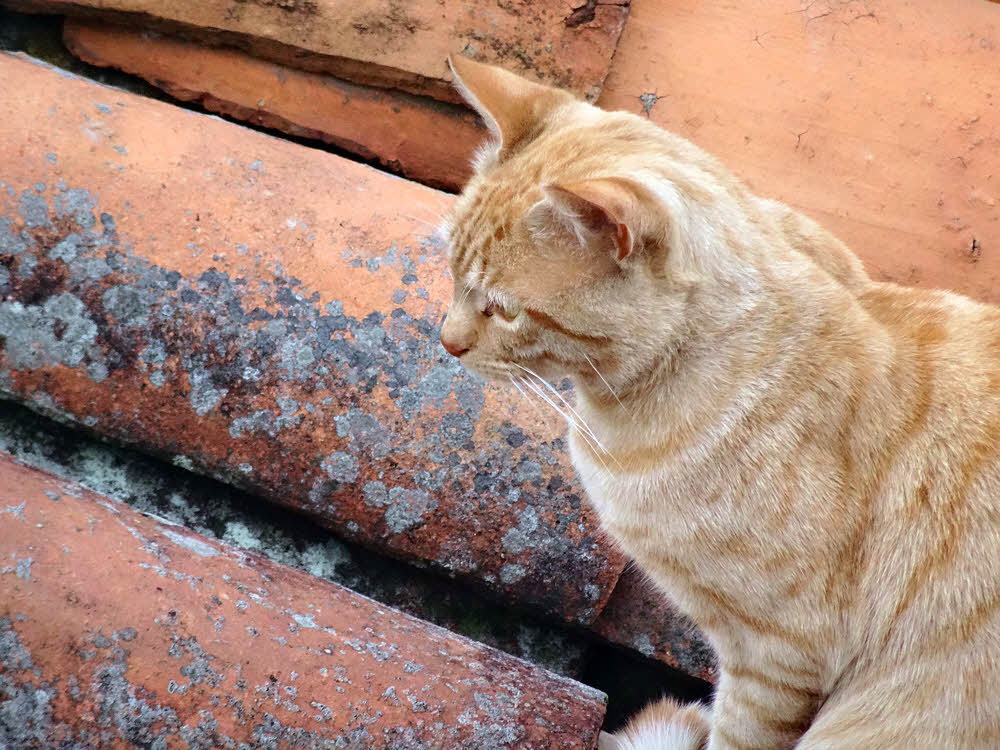
Find the cat, eh?

Cats are where you find them. Always. This is what I found here:

  • Place: el Hogar Cuencano, "back yard".
  • Time: Morning, noon, and night.
  • What: The neighbor's cat.
  • Justification: Because.
  • Result: Frustrated delight.

I like cats. Don't ask me why. Or ask, but don't expect an answer. I've given up on that sort of thing. Answers are not definitive, only descriptive.

I had a friend — knew him since second grade, had several consumer-grade falling outs with him around the age of 30, following his wife running off with someone else, lost contact, but.

But he was a strong believer in rationality. He liked reasons. Reasons as proof and verification of reality. I go the opposite way. Reasons are not definitive, only descriptive. As a Zen master said (bear with me) Life does not come from ideas. Ideas come from life.

Seems self-evident to me, but as it happens, my friend's brother argued this. First the universal sound, The Word, the fundamental vibration, the ur-idea, and then everything else, then the Golden Age of humanity, then corruption and evil, and now we have to struggle to get back there. Pretty standard drivel, but this was not from the usual Xtian theology but from Sant Mat. OK fine. Same bureaucratic crap.

Just another pseudo-rationalist reaction to life. When you are little, the world is great, expansive, good, and golden. When you grow up, not. Therefore, the human tendency is to extend this to cosmic proportions, and declare that in them olden days we lived in and under (and through, of course), the grace of god (or God, or GOD, etc.). And now we don't.

Because evil. Because hard. Because confusing. Because whatever. So, pseudo-rationalism, the twin assertions that "It just makes sense", and "It doesn't make sense". So "it" either has to be, or it can't be. Whether it is or not. Because arguments define reality.

My friend from second grade once argued that realistic paintings such as Rembrandt's were more accomplished because they were more realistic than anything Mondrian or Picasso had done. Because non-realistic art was not precise, or realistic. Right. He was like that. Probably still is.

Lay your face in a Xerox machine and what you get is better than any Rothko. Sure.

He (and his brother too — I wonder how this can run in families) also said things leading to assertions that all of life was rational, or should be. Like walking or digesting food, or having feelings. This is the sort of argument you hear when someone asserts that people choose to be homosexual or transgendered (or Norwegian, I guess, or white, brown, black, or green). Try digesting something in 10 different ways. Try shitting gold bars. Via consciously-controlled processes.

Rationality? No. Most of everything that happens in life may be understandable but is not conscious, and therefore cannot be rational or under deliberate control.

Like cats. I like cats. Don't ask me why. Or expect an answer. The only answer is that I like cats.

In North America houses have big open yards. Front yards. Back yards. Side yards. Go for a walk, especially early in the morning, and you'll eventually see a cat or two. If you're a decent person and learn how to do it, you can pick up a bunch of friends this way. If you like cats, and if you think that a cat can be a friend of yours. I do. Don't ask me why.

In South America, at least here in Cuenca, Ecuador, things are different. From what I've read and hear, I'd say that things are different in this way throughout Latin America, but I haven't seen Latin America, only this once city. But I think that things are pretty much the same: you don't see cats running up and down streets and climbing fences from one yard to another. Because that world does not exist here.

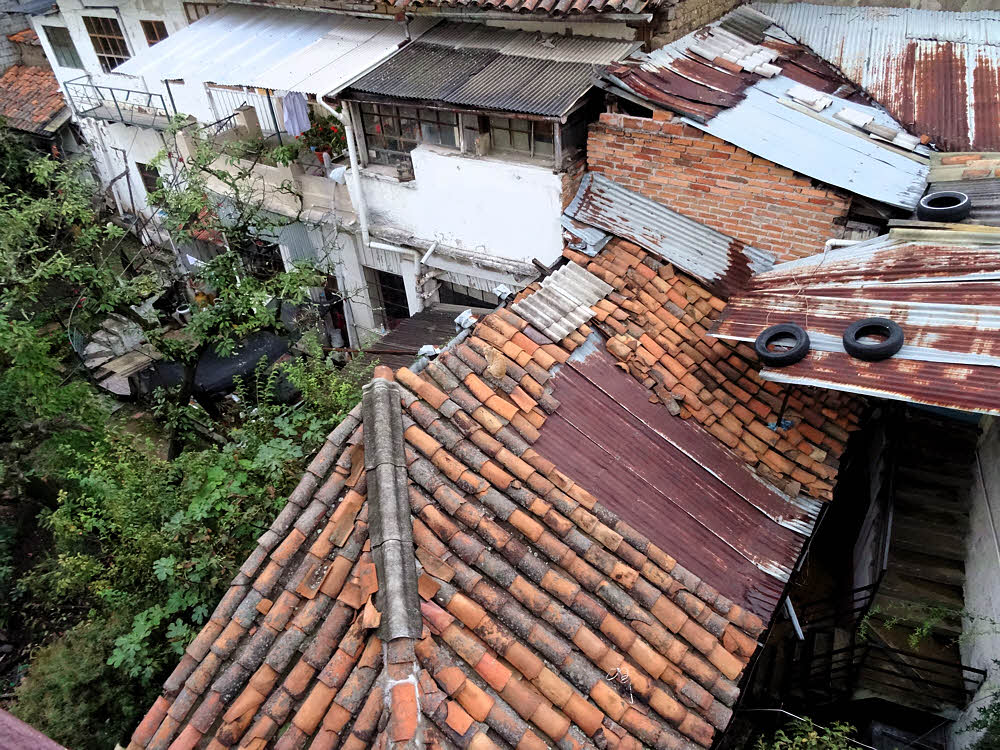
Houses here are slammed up hard against one another. There are no front yards or side yards. No back yards either, really. Places inside the embrace of their respective architectures, like the old Roman style of house, a courtyard-hugging quadrangle, have secret spaces inside them. And roofs. There are roofs. Roofs attract cats.

Roofs are safe, and cats like the high ground, away from dogs, bugs, and random annoyances. The high ground is clean, open, and mostly bug-free. "Bug me not", thinks the cat. So they climb.

Cats can do that. Dogs can't. People can't, hardly. Bugs stay low. Birds can't climb but they can land on roofs, which is a plus for cats. Cats like birds, in several ways, including as entertainment. Roofs provide that.

So what's the point here?

I like cats. That's it. And I had the chance to pssst! at a nice cat on the neighbor's roof and talk to it and photograph it. And that's how I entertain myself. When I find a cat and can't get close and patiently befriend it.

So there, then.

Sunday, February 21, 2016

Pedestriating

It's different here. I think I can say that.

It's different here. In a lot of ways. Or maybe I'm a slow learner. Maybe I haven't been noticing.

Naw — it's different here. In the last six months I've seen more people without legs or with the wrong number of functioning legs than ever. There must be a story there. Lots of stories, most of which we, having heard them, I bet, would want to unhear, though you wonder.

Like the guy who drove past on a scooter with a pair of crutches in a holster, the kind of holster you see in movies about the Old West, where both the long-shooting good guys and the equally-talented and equipped bad guys carry a horse-top rifle. In one of those holsters attached to the saddle.

But he wasn't out on his way to a play-fight or a crutch race I'm guessing, this guy on the scooter, because he had only the one leg with him. I'm guessing though, about his intentions, but despite that he still had only one definite leg. Which means that the other one had gone its own way sometime in the past. Which is a thing I myself think about every now and then, because around here it's too easy to slide into a situation where you come out the other side with fewer legs than you started with.

Due to how things work, or maybe we must say not. Due to how things not work.

Crossing the street is a negotiation, but a different kind of negotiation than in the U.S. In the U.S., you come to a corner and want to cross, but if you stand too close to the street, one lane of traffic sometimes stops politely while traffic going the other direction in the other lane keeps moving, so what do you do? That's one thing,

And sometimes, you come to a corner and want to cross, and there is only one car coming forever, and it stops because you are obviously waiting, and you feel like a dick, like you have to cross right there and then even though you were hoping the car would keep going, so then you could cross with no vehicles in sight for miles and miles, and do it at your own easy pace, but you can't. Because this one driver, apparently, based on all the visible evidence, the last driver on earth, has stopped, so you have to run across the street in front of that person's car because it is stopped and the driver is waiting for you to do your business and cross the damn street and get the damn hell out of the way, and everyone else in the car is too. So you run.

Or everyone stops — everyone — all of them, all four lanes or six lanes of traffic, for some reason. Oh, right, the reason being to let you cross while a hundred or so people wait with their engines running, and then the rest is up to you. This is worse. Much worse. Now you really have to perform, and flawlessly. Or else. Or else you antagonize everyone. Which is about the time you wish you could do backflips and kick your legs way up and dance across the street in a clown suit while juggling guinea pigs, for the sake of all those tons of stationary vehicles, and their drivers, and the passengers of the drivers. All waiting for you. While you just walk in an ordinary and uninteresting way. Across the street.

But that's there and not here. Here it's different. I'm still not sure.

I'm sure that it's different here, but not so sure how it works yet, exactly, with infinite precision. This is only my third winter here. After all.

I'm thinking maybe it's like people are used to living in a small village among sheep or goats or chickens, and all those sheep or goats or chickens have jobs and families and obligations of their own, and are all out on the streets all day, going about their respective businesses. And when those people who are used to living in a small village and walking among busy sheep or goats or chickens come to the big city, they carry on.

And here, in the big city, the sheep and goats and chickens are taxis and buses and vans and they all have steel teeth to bite you with. To bite your legs with. Off. To bite them off.

But people don't know that, quite. The pedestrians. So they drift through moving traffic as wind through rushes, seemingly oblivious, and mostly it works. Whole families. Families. Crossing streets, often in the middle of blocks, completely carefree with not so much as a single simple glance toward dozens of vehicles and their hundreds of tons coming along. Coming along at them, the people, the families, mother, father, little tiny children, and a baby or two being carried, all drifting across the street like wisps of smoke and somehow, in my experience, which I am thankful for, making it safely. With all their legs.

And yesterday, to illustrate another point, two men. Toward evening, crossing Calle Mariscal Lamar, against the red light, were honked by a taxi. Honked upon. Honked at. And the first man continued, and mounted the far curb, safe. But the second man, the trailing one stopped. In the street. In front of the taxi, and looked at it as the taxi swerved around him, continuing without slowing, and remained standing, the man, after the taxi passed, and he, the man, then turned and watched the taxi recede, still standing in the street as the rest of the city's traffic advanced on him, until he was good and goddam well done looking, whereupon he resumed walking and then mounted the curb, rejoined his companion, and proceeded on his original course. All legs present and accounted for.

While I stood Mr. Careful Cautious atop said curb in relative safety and watched it all until the traffic light changed from red to green and then and only then decided to think about crossing the street. Which is one way you can tell the gringos from those who are likely to lose some of their legs sooner than the rest of us. Because traffic here does not yield or slow, and often seems to accelerate when feet hit the street. Gringo Feet. Mine anyway. Definitely mine.

And though I may yet join the leg-lacking through ineptness or misapprehension of one or more subtle cultural cues, it is somewhat comforting to know that the first rule of traffic here is that if you have legs, and are using them to get around with, then it's up to you, all up to you, yourself, alone, to look after them, and no one will stop or slow or yield at all, not a bit.

To everyone else you're no more precious or interesting than a bug splat. So look sharp there and step lively then. Or else, maybe.

Sunday, February 14, 2016

Secret Cat Secrets

I read that they used to burn cats here, for fun, in the main public park.

Well, they used to do a lot of things in a lot of places, and not just with cats. Sometimes, in some place, they burned people, not so much for fun but to feel good about keeping things orderly by suppressing evil. People are like that, which is why I don't trust many of them, but I'd be more willing to trust someone who burned witches than someone who burned cats.

Or do I have that backward? I'm not sure any more, which is how it gets when you grow older.

Being young, when you're young, when everyone you know is young and anyone who matters is young, then things are much clearer. Things are obvious, and right is not wrong, and wrong is definitely wrong. And so, you might burn cats or your neighbors, and go home feeling happy about it, and only much later realize the regret, when it is decades past the point that you can reconsider.

Cats think for themselves and come home dragging their own opinions, which are often at odds with the opinions of those who want to dress them in cute outfits, let alone those with a fulsome supply of matches and not enough to do, because cats have to look out for themselves.

Cats are small mostly solitary animals. Housecats are. Bobcats and cougars are different — not sociable, not domesticable. Housecats are like your grumpy uncle Ed who huffs and snorts a lot and seems to disapprove of everything but always seems to come around needing a little company, and maybe he's the one who leaves you $600,000 and a note saying thanks for being there, and then you wonder if you really know what's going on.

Cats are small. They know it, and humans are gigantic in comparison. They know that too, and don't want to get stepped on, so they hang back until they feel sure that you're safe to be around. And they aren't pack animals, so if you want a relationship with a cat, it's a one-on-one deal. You are judged on your performance, not on your species. You have to do more than show up and throw an occasional stick across the lawn.

And another thing — a cat has to be socialized as a kitten, or else you'll never see it, let alone be become its buddy. If a kitten isn't handled daily during its first two months, then it will be wild forever, and nothing you or anyone else can do will make any difference at all. So cats are not dogs. They have to learn while young that humans are OK, and then they have to learn as adults that a particular human might be OK. It takes work. On your part.

Which has something do I guess with why I don't see many cats around here. They have places to hide, and they do.

There are no yards or fences here to sit in or on. No porches. There are no wild brushy spots between houses. There is nothing like a park here, as North Americans know parks. Here, this city (and judging from photos, most Latin American cities) are piles of stone and concrete and slabs of pavement all jumbled. These are not great areas for cats to lounge in, so they don't get out and lounge.

A cat here might have a secret hidey-hole in a wall that it can crawl into and peek through, or a chink elsewhere that serves as a spy-hole, or it might have a balcony to lounge on, above you, above traffic, above danger, but not much else.

The action here is inside. The action here is on the inside of city blocks and not the outside. Inside homes. City blocks here are hollow. Houses are facades with whole worlds behind them, hidden. Gardens are inside, as are the trees and shrubs and what safety there is.

That's where the cats stay, and where life happens, and why I don't get to see too many of my little buddies. Which leaves me a bit lonesome then. My loss.

Sunday, November 1, 2015

Surprise Me

Bang.

Bang. Bang.

Bang. Bang. Bang. Bang. Bang. Bang. Bang. Bang.

This is life around midnight. It's Festival Time. That means fireworks.

Fireworks are things that explode.

Bang.

Bang. Bang.

Bang. Bang. Bang. Bang. Bang. Bang. Bang. Bang.

Like that. Got it?

Want sleep, buy earplugs.

Can't find earplugs? Forgot to bring earplugs? Other stuff doesn't work? Like cotton wool, lint, cat fur, mozzarella, candle wax — well tough. Learn to sleep through it.

Or die trying.

Either method works.

And if you can't manage one of those, put on your party suit and get out there. They're expecting you.

Monday, October 26, 2015

Oinki Fadeout

[Cue quiet snork.]

Three years ago it was all over.

I've photographed it dozens of times in dozens of places.

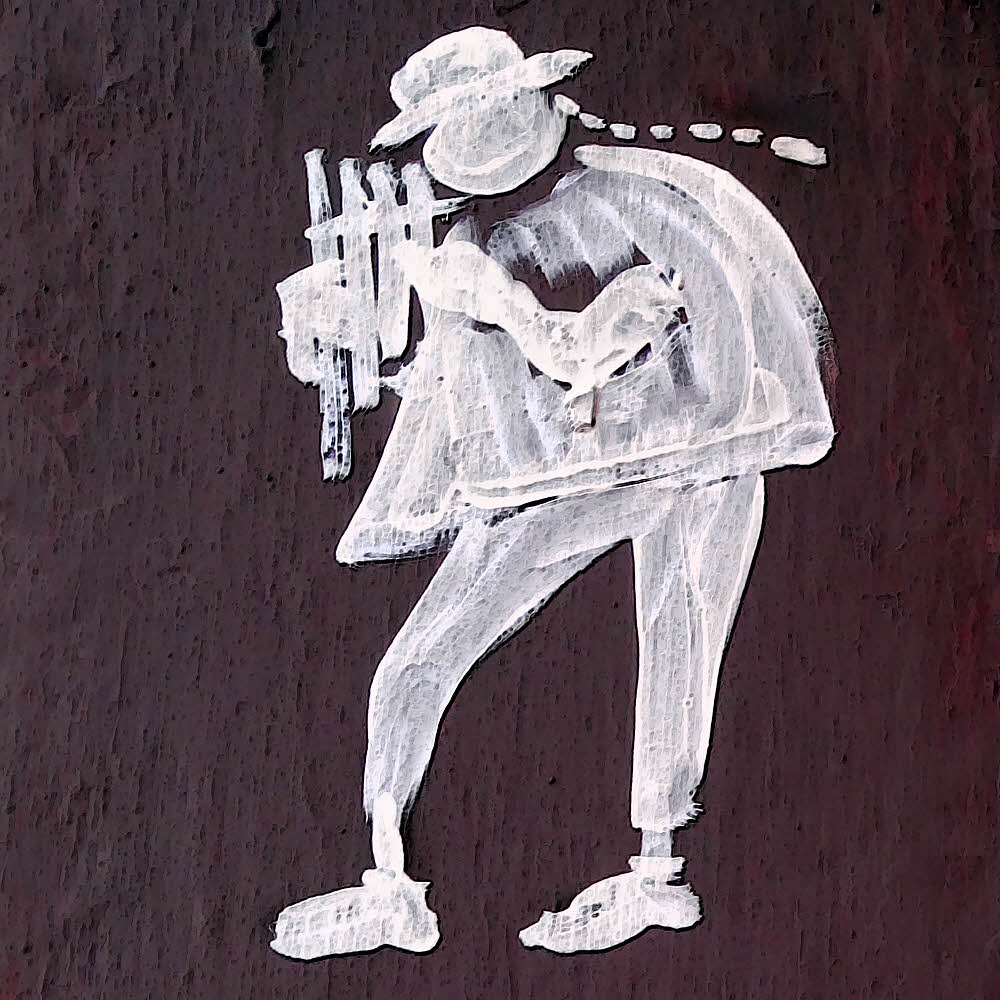
Sometimes only a pair of nostrils in an ellipse, sometimes a circle with two eyes, two nostrils, and a mouth line. Sometimes one or the other accompanied by an OINK!

I read the last as oinki. Whatever, exclamation mark or the letter I, it works.

My pal was everywhere, including a couple of feet below the second-floor roof of Mercado 10 de Agosto. That's a public market. It's full of people all day, and when it isn't, it's locked up tight.

I don't know how Oinki got there but there Oinki was. (Gone now. Painted over.)

Gone from a lot of places now. Faded. Washed out. Washed off. Hidden under corrective layers of new paint.

Whatever — however, my friend is fast fading from the scene.

So I was happy today to see Oinki again on Avenida Loja. But hurting. And it's only a matter of time before Oinki is no more.

Like all the rest of us.

Thursday, October 15, 2015

The School-Prison Equivalence

Ever been to prison?

Me neither, unless you count that once.

Once, or twice, or three times, depending, etc. — once inside, twice on the grounds. Strictly business.

One tour, just me, Norman, and the loud sloppy not-so-bright guy whose name I can't remember from the local chapter of the Germans From Russia historical society. Let's call him Reiny. Close enough.

Norman was curator at the State Historical Society of North Dakota. I was his assistant for two and a half years.

Reiny gave us the tour of the state penitentiary. He worked there part-time. We got to see stuff.

And then again later Norman and I went out and documented the furniture in the warden's residence. All old stuff. We had been meaning to for quite a while, but you know Norman...

Anyway, suddenly it was a rush job. Get out there today. Just do it.

We had a nice chat with the warden's wife and tucked little notes about things all over the house in preparation for photography and detailed measuring and note taking the next day, and then the warden came home early. He had just been fired.

How convenient. And there we were. In his house. Sent to make sure that none of the furniture disappeared.

That's how we found out about that, our real purpose for being.

And it sort of fits in with the whole prison thing — you aren't in charge and if you ask too many questions, or the wrong ones, or any, then the train wrecks itself on top of you.

I'm reminded because the schools here are like prisons.

There is a big yard inside.

The front gate locks everyone in.

The inside world is cut off from the outside world.

Inmates wear uniforms.

Moving around has set hours, all locations are off-limits without specific permission, all activities are pre-determined and depend on approval, as does association with others for anything whatsoever.

Count on it being either mandatory or prohibited, whatever you're talking about.

And expect to know which questions are allowed. Or keep it shut. Mostly shut.

Your mouth. Your mind. Your imagination. Your consciousness.

And be invisible as much as you can.

I experienced a week at a Catholic college once. Until it blew up. I'm not good at following orders.

No, nope, and not.

I wouldn't do well here, in a Catholic grade school, and it's in no way related to me being 10 times older than some of the students.

But it seems to work well enough for them.

It seems to have worked well enough. In the past.

I wouldn't count on a prison-discipline regime turning out graduates of adequate caliber for global competition. Now that there is global competition.

And maybe that's why they haven't elected me king.

Because I'd change everything, doncha know. PDQ. Assuming I even wanted the job.

Sunday, October 11, 2015

Checkmate

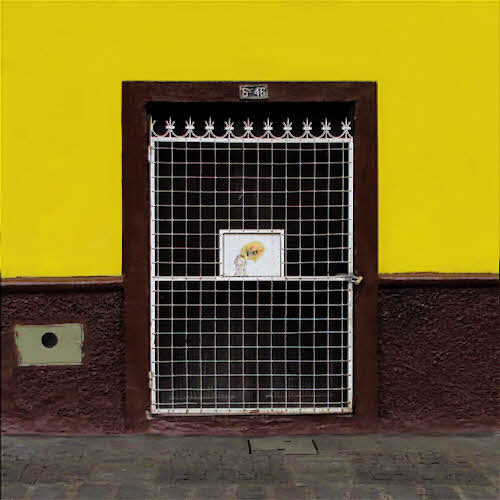
You walk right up to one and there you are. Barred.

Whether you expect it or not.

Bars and locks — that's the way the cityscape goes around here. No way in, and sometimes no way out. Stalemate, checkmate, done up tight.

It's that way with the attorneys I'm seeing. The office is locked. You can't get in.

Unless, that is.

They are expecting you. And want to see you.

And then they come and open the door.

But with windows...forget about that. Forget about any part of it. Anyway, are you really going to climb in through a window? Or even stand there and peer in?

Probably not recommended anywhere, least of all where the bars were put up long before they knew you were even in the neighborhood.

So what they hey, it's an observation. Don't expect me to go out railing and wailing, I just keep my eyes open, watch what happens, sometimes mention it, occasionally suck my thumb.

Bars and locks — that's the way it is around here. Amusing in a way.

Or not.

Depends on how you're feeling about things that day.

Wednesday, October 7, 2015

Detergent Stinks

Let us now wilt perceptibly.

I needed to do some laundry.

Fine. OK so far.

I found a self-service laundry. These are rare to non-existent here. Here, labor is cheap and machines are expensive.

Also, here, few people know how to operate these expensive and delicate machines. Which is why ordinary humans are not allowed to go into a shop or library and run off a few photocopies. Someone has to do it for you.

Someone who knows how, who has been trained, who will not hurt the machine.

It's the same with almost everything else: Don't touch, please. It may break from you. We do this for you, included in price.

But I found a self-service laundry (lavanderia autoservicio).

It may be the only one here, but OK. Fine so far. Just one more thing.

Detergent.

I needed some.

Luckily for me, Coral has a good supply. Lots and lotsa detergent. Comes in every color and all amounts. All are brands I've never heard of.

It all stinks.

It really stinks — all of it. I mean, really. Ninety-eight percent industrial nose-killer, two percent detergent.

Today, about two weeks after having bought some, and thinking back on it, my nose hairs quiver. They shrink and shiver, wilting even now, attempting to run and hide. Right outta my nose to somewhere sheltered and safe.

Well, the buying part is over. I bought some, and left. Got out of that store's aisle with my tiny, 61-cent bag of something-or-other, back into the reassuring relative freshness of diesel exhaust and dust on the street.

With my tiny bag.

With what I thought was maybe, possibly, the least stinky detergent available there, that day.

But who can say?

Who can say? Really?

At least the bag is small, and I try not to use much, and add in an extra rinse cycle, and hope that the dryer will burn off most of the residual stink, and convince myself that the atmosphere will deal with most of the rest, and believe, sincerely and ardently, that I can deal with what smell is left after that.

Without absolutely keeling over and croaking my last feeble croak.

I can hope, can't I? Can't I?

Friday, September 25, 2015

I See You?

You walk around.

If you want to see anything, you do. Walking is the best way to see things. And here is no exception, seeing things here.

To walk, you need open spaces. Open spaces to walk in, walk through, experience, explore.

But you don't get much here.

It's different here. This is a private society.

Streets are necessary. Streets are mandatory. Otherwise we'd all need to be birds. That won't work for me. I've tried. When I was young. With the arm flapping. Every kid tries it. It doesn't work.

So flight is out.

Moving around on the ground, the obvious place to start is with your feet. You move them. And then you move.

And to move you need streets. Because moving feet can do only so much.

Moving feet move bodies, and bodies can carry some of this and that, but not much else. So that's were wagons and carts and donkeys and then cars and trucks and buses come in. All require streets.

So we have streets here. They are essential. But this is a private society.

Which means.

That things are different here.

Open spaces are rare, aside from streets, occurring randomly and relatively unpleasantly, as parks. They aren't. Not as we know parks. We foreigners.

The parks here are flat squares of pavement, with a few shrubs, and a scattering of fenced-off trees.

Not what we think of. No. Not what I think of.

The open spaces here are inside houses. Or other buildings.

Schools have them. You can see. Every now and then you can see. Them. Inside. Inside the walls inside the buildings.

Safe areas. Protected areas. Private areas. Roman villa style, rooms around the periphery, space in the middle. Sealed off from the rest of the world.

The parks. What they call parks. Are incidental. Really.

Token gestures.

When you go to a park, you're going to a place you go to be public.

And that's different from.

From what?

I don't know — different from what I used to know. Just different. More public in a way.

Deliberate.

Like making a political statement, or formally proclaiming a religious view. I am here, now, today, in this place, and am visible. So there. Done.

And then you go home and get all private again and no one knows where you really are or what you are up to and no one cares.

You behind your walls.

Monday, September 21, 2015

JBoob With Chicken

Hey. Don't blame me. I just pressed the button up toppa the camera.

J was already there, boobing around with a chicken on his shoulder. It was like that when I got there. It was like that.

I dint have nothin to do with the chicken neither. Is that a chicken? Who knows? It's something up there beaking into the sky. Might as well call it a chicken. Looks happy. Can't beat happy.

J don't look so much happy, but that's kind of the story. Sad to be here, sad about what seems to be happening, sad about what comes next. Even for the guy in charge it's not a happy story so I'll go with the chicken. Or the boob.

No.

No matter what it's a creepy boob. I don't know. What's the real story here?

Too late to ask, I just pushed the button. So away we go then, and something different next time.

Tuesday, May 20, 2014

Step, Shove, Walk

We're all happy here, except some of us.

You'd think that with the typical sidewalk around four feet wide (1.2 m), there would be issues. This can go one of two ways. Either people go out of their way to accommodate each other, or they bump a bunch.

It's some of each.

I've been slammed from most every side, and had several of my feet stepped on, the latest incident being this morning. That's inadvertent, the stepping-on. No one goes out of their way to step on anyone else, not even on me, but you need to pay attention.

Walk too close to the curb and you're often only a foot from motor vehicles. When it's a 12-foot-high (3.7 m) bus you almost get sucked along, though after a couple of days you don't worry so much, but I'm still expecting to be brained by one of the side mirrors. Unfortunately, I worry about this only after the latest bus goes past.

Cabs? Almost unnoticeable, they're so tiny. Normally, but anyone can get killed by a cab as easily as anything else.

And then what?

Walk opposite the curb, and skim along the storefronts. This is probably worse. Get creamed by a cab or bus and it's over, at least the walking part of your life. Skip like a stone along the open doorways of hundreds of shops and you'll soon be t-boned by another pedestrian. Because no one looks.

People shoot out of shops at any time, at every velocity, and in any number. No one looks.

You're on an empty sidewalk and then someone's is on you — crash. If you're slow. And not watching. But you can't watch everything, and mostly you want to watch the pavement for holes, dropoffs, lumps, dog shit, curb cuts, random debris, and dog shit. Secondarily, as your mental processes allow, you watch for _Bumping Bennies_ bouncing out of buildings.

And no, you walk either along the curb or along the buildings. You can't walk in the middle or you'll never get anywhere at all — it's too crowded for that. Families walk in the middle three abreast, four abreast, in packs, and in small herds. The singleton walker must skirt them to get anywhere.

Still, no matter how careful you might be, you get sideswiped, especially at street corners. Come to one and stand, waiting for the light to change, or at least for the traffic to thin enough to allow a proper jaywalk, and you'll be bumped and jostled from every angle.

People want to get places, like getting to the next corner where they can repeat the process, as soon as possible. Anyone willing to preserve safety by not threading through moving traffic to get across the street against the light is not respected.

But the cake. It was taken one day, a few months back, as I was headed on my way back from lunch, by a local couple.

A circle of teenage girls was standing on a sidewalk, a particularly wide one. It measured five feet or so (1.5 m) across, and the girls took up all of it. I could have gone round to my left, out in the street, which was safe at that point (a parking lane with an empty slot at that location), but a man and woman were approaching from the girls' other side, making the scene even more congested, so I waited.

And I learned something.

If you're a suit-wearing, gray-haired man walking with your wife (or adult daughter, or mistress) and there is a group of girls standing on the sidewalk and blocking it, what then — What do you do?

  • Stop and wait
  • Ask them to move
  • Go around
  • Cross the street
  • Something interesting.

Of course the answer is Use your hand and shove one of them out of your way.

Yep. 'S what he did. Just shoved one of them about a foot and a half, and continued walking with his woman.

Conveniently for me, I was stopped, and was able to witness it all, and as an added bonus I was able to scoot around in the old gent's backwash, because the girls did not re-form their ranks.

They didn't pull knives either, or even say a thing. They looked at him, especially the one that got shoved, but that was it.

Pretty slick, but I'm not going to try it. Not this lifetime. No, better not.

Monday, May 12, 2014

Love Over Foamy Water

Lock it to the rails.

I guess it started in France. At least that's where I hear it's going gangbusters. On a bridge over the Seine. Which is about where everything happens, isn't it?

Once upon a time the gods decreed Carve your initials in a tree. And then they got chalked on sidewalks and spray-painted on buildings. Inside hearts.

It was hearts everywhere.

Now it's locks, and there are even a few here, on one bridge.

I gather that, to show one's true forever-love, it's necessary to buy a padlock and go with your sweetie to the designated spot (the place where everyone else is doing this), and then fasten that padlock to the bridge.

If this was an ideal world, the next step would be going for pizza and beer, but I don't know what they actually do. Après verrouillage. But pizza and beer has to come up every now and then. In an ideal world.

I guess people feel insecure in the world of ideas. They need to throw in a hunk of matter here and there to make their lives seem real. Symbolism I get but I've never quite understood that lust for relics and other lumpy stuff. Could be a lack of imagination for them, or maybe I really am from another planet.

You know, I could almost get it if they took not just the padlock, but the whole toolshed and put that up on the bridge with the lock still attached. Especially now, during the rainy season.

I'll leave a note, get back to you if anything happens.

For now, this is me, signing off yet again.

Saturday, May 10, 2014

What Color Is Your Pared?

See it? Right there. Look. Color.

Color is certainly different here. I.e., there is color here.

North America, you're way behind. Way, way behind, but you may not be able to do anything about it.

I was just thinking about this a few minutes ago.

For example, you build a house, or you buy an existing one — doesn't matter. Then you put up a wall, effectively putting your property inside a courtyard, with an opaque wall around it. And a locked iron gate to control entry. Or a solid iron door.

Done. And then what? Everyone would go nuts. They'd suddenly want to know what you're doing in there. Right? What it is you've got to hide?

Satanic rituals? Animal torture? Weird experiments?

Maybe you just like privacy, but that doesn't work in North America. Forget that normally you don't need eight-foot-high stone walls topped with electric fencing in North America to keep yourself safe, so you'd at least need a severe desire for privacy to do this. Followed within weeks of the wall's completion with you being run out of town for not being like everyone else.

OK then, skip the wall.

Instead, paint your house bright blue. Orange will do too. Or brilliant, screaming yellow.

No matter — you'll get about the same response.

Color isn't allowed unless it is dull brown or dull green, or slate gray or white. No crimson. No neon green with purple trim. None of that.

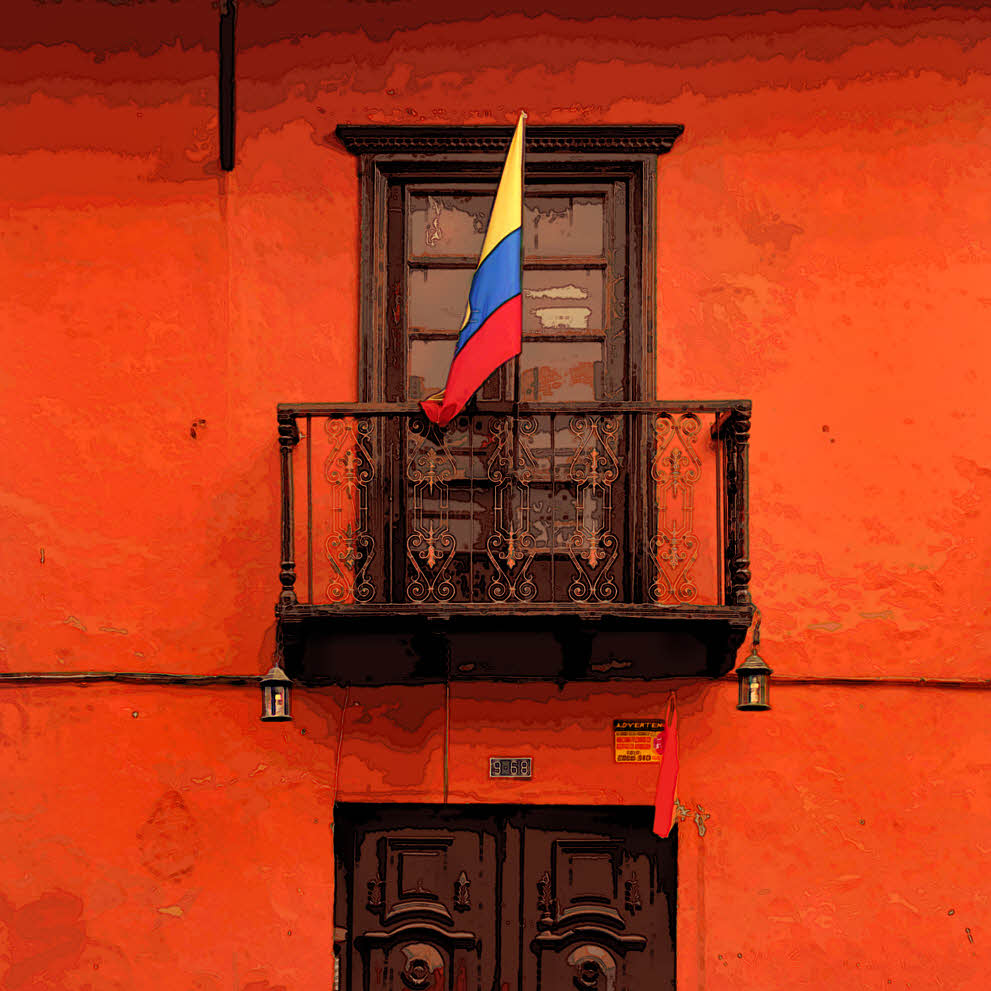
But here? Yes, it's OK here. Almost required. Something is required. Some color that indicates life and enthusiasm and a desire for celebration. No one seems to care how any particular building is architected or constructed, or whether it's next to an office or a junkyard, let alone what color it is, or used to be.

A huge number of buildings in the historic center of town even show, around to the side, where their weathered walls are visible, that they're made of mud brick and wattle, and they are still standing after 500 or so years. So that gives you some perspective. In the sense that those buildings just are. And so what?

If it's there it's OK, or you don't care, or if a building is especially noticeable you have a landmark.

But if it's colorful, in and of itself, then what?

Non-issue.

Monday, April 14, 2014

Dump Town

Some of it's in your head. Maybe all of it.

Take a walk. What do you see?

Around here it's a lot of everything.

People are on the streets, dogs are ranging, pigeons are hammering their pecking organs at every speck, car horns are kicking us all in the head, buses are laying down block-long loads of dark, lingering, opaque diesel exhaust.

Look up then. What's there?

Mud brick, wattle, clay half-pipe shingles, peeling paint, tangled electrical and telephone wires. Cracked or smashed windows. Fading signs. Drying laundry. Decaying wood.

This is a dump. It's rotting, even some of the new stuff. Nothing in old town is straight, not any more, even if it once was, and there is damn little of that.

Many sidewalks, those of tile, are constantly dusty, or permanently stained by pigeon crap, or those plus dog excrement, even after the latest torrential rainfall yields, recedes, and dries. Cobble pavements are buckled as though the stones themselves want to pry themselves up and make a run for it.

Other sidewalks? The graveyard of concrete. Where it goes to die. Disaster zones. Lumpy, roiled, rolling, broken, cutting, split. Finding ten paces of solid, flat walking space is a treat you take your friends to explore.

This is paradise. They call it that. Mostly those selling real estate, or tours. Hey Mom, hey Dad, come see. Greatest place in the world to retire. We say so right here, and we can make it happen for you too. Sign here, 'K?

You know what? This is a place. Maybe you like it and maybe not. Maybe some of it, or only parts.

Don't like it? Maybe you aren't paying attention — not noticing the parts you'd like.

One thing — it's alive.

Go out at six a.m., a half-hour before sunrise, and people are working, setting up for the day, having at it. Putting up their stands, filling buckets with water, arranging flowers, waiting for the soup lady. City crews are somewhere close by, with their water truck, spraying down this area today, that area yesterday, the other area tomorrow.

The street sweepers are already out too, with their brooms and scoops and wheeled trash cans, diligently chasing down all those tiny scraps that you never see, because they got there first.

Delivery trucks, a few, sneak along here and there, and later, when the sun is higher, there will be women and men and boys and girls pushing their wheelbarrows of strawberries or grapes or cherimoya. The sun does it, gets it started and then accelerates it, until day definitely gets its hold on the world and makes it bright and warm again.

And all those old, cracked, faded, lumpy, sagging buildings showing their bones in those side walls and such? Some of them begin to look really fine after all.

Friday, April 11, 2014

Receptionists Have Shotguns

Would you like buckshot with that?

I haven't seen any violence but I've heard of some. A friend relayed a story, second-hand, about a man taking a shortcut home through the park at around 7 p.m. one evening. This would set the scene at roughly full dark, sunset being at 6:30. The sky fades fast here.

The man woke up on the ground, stripped of all his valuables, including a ring that didn't come off his finger anymore. His attackers found a way, and the man just barely kept the finger, after several reconstructive surgeries.

So things happen.

There are subtle clues, and you don't need to look far for them.

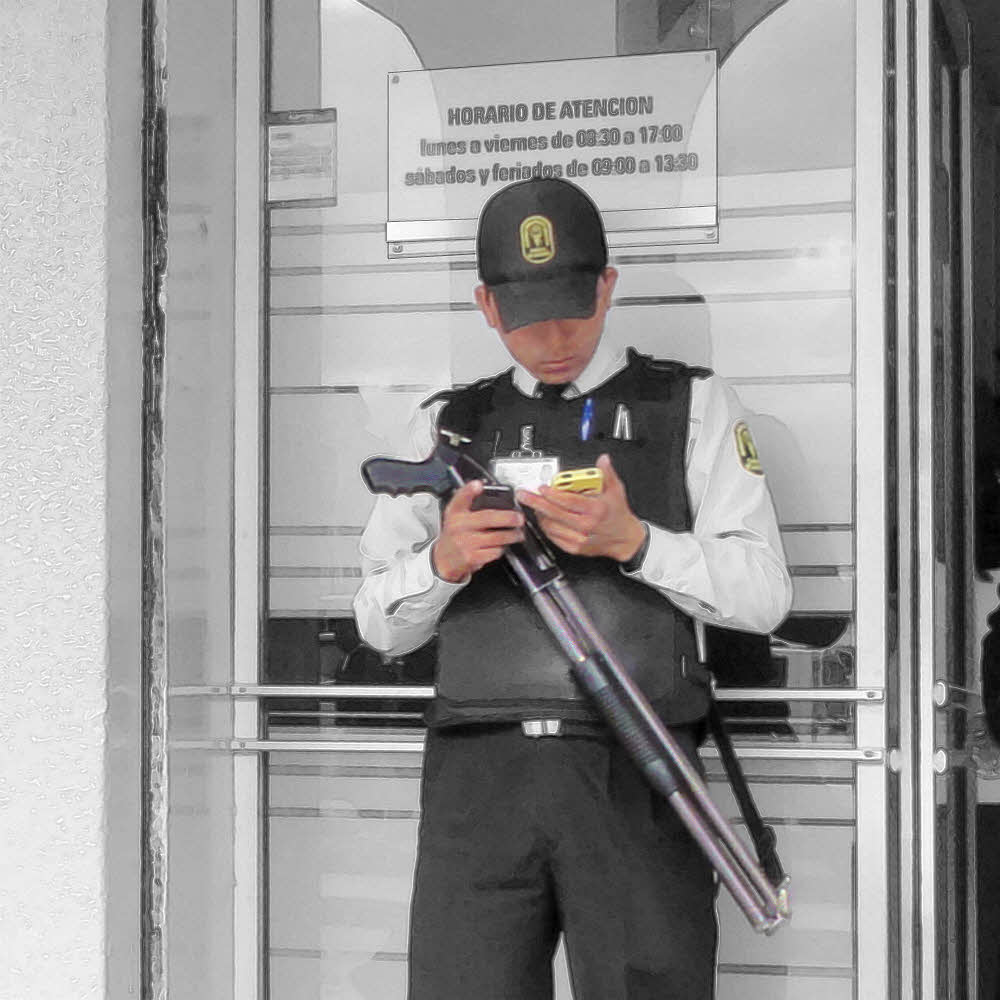
Every one of the "fancier" or more "important" businesses like department stores has guards out front. These are normally armed with shotguns. Western Union has one. He stands in the doorway all day with the 12-gauge slanted across his torso. Coral, a major department store chain, does. All banks do.

Even a pharmacy I went to has a guard with a nightstick. No shotgun needed there, for some reason. I had just come from SuperMaxi, a grocery, with cheese in a brand-marked plastic bag. The guard stopped me as I blithely traipsed in, and indicated that he needed to have the cheese. He got it.

I'm sure he could take me even without the nightstick, but regardless, when you encounter a guy in uniform, wearing a bulletproof vest, and carrying a stick, why make a fuss? And in truth I have to confess that I didn't look to see if he also had a sidearm, which would definitely tip the balance of power even more in his favor.

The bank I go to has three or four guards, outside. It has a parking lot to one side, and a sort of long plaza leading up to the door. One lot over there is another, associated building, behind its own fence, and one of the guards stays there. The ATM is what I go for, and there are two of them quietly waiting, outside. That is as far as I go. Coming in, I raise my hat to expose my face, pull out my bank cards, get my money, and leave. No loitering, no fussing, no wasted effort. I don't want to get a bad reputation. Not surrounded by uniformed firepower.

Overall, in my extremely limited experience, the guards seem to be at their posts to indicate that there is someone there, on alert. It's like having a sign. Many guards are quite young, and it is hard to imagine a man in his early twenties, probably married, and with a child or two, getting into a shootout along a street chocked with pedestrians, over a bag or two of paper currency. I guess that isn't my line of work.

But good jobs are not common here, where labor is cheap. Even if a guard has nothing to do but stand at the ready all day, it's clean work, and the uniforms look good. No doubt many guards get to know regular customers, and the pay has to be far better than for pushing a handcart and selling ice cream cones or pineapple slices.

And in many ways it seems to be a social job. The guard at the transit center was happy to shoot the breeze for a minute or so as my friend and I came in to get me a bus pass. To me he looked intimidating, standing behind and eight or ten foot high fence topped with tooth-like spikes, and carrying a weapon. But in practice he was friendly, obliging, almost breezy.

And ultimately, what I've come to think is that these people act primarily as guides, sources of information, and...receptionists. They are there, out front, screening who goes in and watching over the public face of the business, handling inquiries, sorting out minor confusions, keeping it all running.

Isn't that a big part of what receptionists do?

Except that where I come from, receptionists can't open fire even if, some days, they really, really want to.

Saturday, April 5, 2014

Walk This Way

It's harder than it looks.

You don't see them coming.

Approach any street corner and you're likely to get creamed by someone coming the other way. The best technique is to slow, swing wide, and peer around the corner as you approach it, especially if you plan to send your whole body in that direction. Next best is to slow, possibly to a stop, and look cautiously.

Neither works reliably. You're likely to get creamed about half the time on most busy corners. It may be one person coming at you, which isn't all that bad, or what is more likely, it'll be a family of six, and you can't take on all of them. Usually the best you can do in that case is to stop, flatten your back against the wall of the building, and wait. And hope for the best.

If you are very lucky, you will find a street light standard or a traffic-light post there, and you can shelter yourself behind it. But don't count on it. There aren't enough of those to go around.

Sure, I've probably said it before and it's true — the sidewalks here are narrow. And that is only part of the story. I'm not certain that I know the full story, and probably will never know it, but here are a couple of observations.

Even if you have nothing but almost-collisions all day when walking, you are not responsible for that. You are probably the only person watching where you are going. It isn't entirely your fault. Somehow, the locals seem to know what is going on in traffic, and can drift through a stream of moving motor vehicles like smoke passing through a picket fence, but on the sidewalk it's a wholly different story.

People saunter three and four abreast, completely blocking the whole walk, and are oblivious to everyone else. Even when walking two abreast, they center themselves so that no one can pass either on the right or on the left.

If they come to a stop, people will stand in a knot and talk. Everyone else in the world will have to go around. You don't count.

Curbside car doors spring open at random intervals for someone to get out or for someone to get in, or for no apparent reason.

People charge straight out of businesses without looking, either right or left or ahead — they just come. One day two women were exiting a shop to my right. I was moving smartly, at about three miles an hour (5 km/hr). Both women were looking back into the shop over their right shoulders, and talking, possibly to someone inside. They had no idea what was happening on the sidewalk and they didn't care, because people don't think of that here. I strode past. My right foot was the trailing one. Before I could lift it and be completely past them, one of the women stepped on that foot.

This is not unusual. I get brushed past, nudged, and bumped all the time.

All day long, on every street, pedestrians cross willy-nilly, with or against the light where there is one, or randomly, mid-block, block-end, or anywhere else, as if they are choosing their timing by coin flips and their routes by dice throws.

They stop and stand, or stop and turn, change direction, wobble, weave, spin around, and do anything and everything you don't expect people to do. Everyone is everywhere all the time.

As you can see by the yellow footprints that appear after the street gets striped, and which continue for several blocks in different shoe sizes.

Monday, March 17, 2014

Water World

The leaking wall.

Why does la Asociación de Hoteleros del Azuay stink of urine?

That is the question, one I had often wondered about, especially when passing on the south side of the building.

What was it about the Hotelier's Association of Azuay Province, specifically, that made it reek? Could it be their bylaws? The shape of the building? The color of the paint? The plaster used in its construction? The building's specific spatial orientation? Its fung? Its shway?

Evil spirits?

Maybe. Anything is possible, and not just here, but everywhere. Anything at all.

True. And that is what makes life special.

Life is special because it is composed of living beings, each and every one of which, in its own way, is capable of noticing odd situations and strange events, and then (again, each in its own way) of understanding the weird, and reacting. Even plants.

Plants can tell that the sun moves across the sky. This is basic understanding. We, of course, know that the sun does not move across the sky because we are brighter than plants, and confine ourselves to speaking about the sun rising in the east and setting in the west, but not about it traveling across the intervening distance. In other words, we are more perceptive, and are wrong in a more subtle way.

But the real point here is that plants (even plants) are sensitive and smart enough to know when something is going sideways, and are capable of dealing with it. By bending their stalks to compensate, in this case. Rocks can't do that.

Now, with regard to la Asociación de Hoteleros del Azuay, I noticed. I noticed the funk. You can't avoid it, sometimes even from across the street, but I didn't catch on.

Some clues follow.

  1. Every now and then I see cab drivers standing side by side, facing the river, with their backs to the street and their hands down in front of their crotches. I know what that means.
  2. Occasionally I'll notice a pedestrian or bicyclist, facing the river, and so on. I.e., ditto.
  3. It's common to see a vehicle stopped along the highway with the driver and passengers standing, hands down in front of their pants, facing away from the road. Check.
  4. Downtown, guys facing a building, wetting it, in plain view of everyone else. OK, right, got it.
  5. A mother at a bus stop, coaching her five-year-old son on how to do it right. He is standing next to her, facing a wall, letting fly. She is there for him.

Hmmm. But what do those so-called clues have to do with la Asociación de Hoteleros del Azuay and why it stinks of urine?

Boy, that's a real pisser of a question — I had no idea. Really I didn't. Could there be any explanation, I thought?

Well, maybe. Maybe not, but maybe.

La Asociación de Hoteleros del Azuay stands at the corner of Presidente Córdova and Padre Aguirre, two thunderingly congested streets in the very center of Cuenca. Padre Aguirre is a major bus route. I finally caught on to that, and now walk one block north, on Mariscal Sucre because of the diesel smoke. Because there isn't any on Mariscal Sucre. Seriously. I do this now. You don't know diesel smoke until you try walking along Padre Aguirre. You can't.

You have to swim. While holding your breath, with your eyes closed. At the right time (about every 10 minutes, all day) you can see it. You can't avoid seeing it. Two or three buses heave themselves up onto their feet, tumble forward, roar, and spew gigantic black clouds out of their rear orifices. Eventually these clouds thin to the point that light again reaches the street, but leave the entire street blue and hazy for blocks. North American buses don't act this way. Not at all.

And on the northwest corner of Padre Aguirre's intersection with Presidente Cordoba is a large public market, taking up a full city block, so it's really busy there. People. Cars. Trucks. Buses. More people.

Guys stand on that corner, behind la Asociación de Hoteleros del Azuay and bleed their lizards.

That's it.

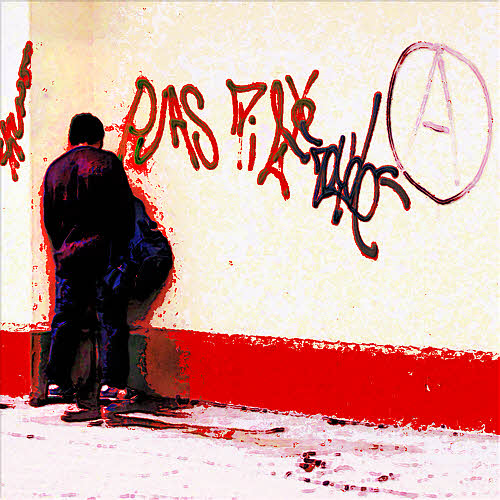
Guys standing approximately 10 paces from one of the busiest intersections in the city, whizzing away at the back wall of the building. But it's OK, because their backs are to the world at large. Only their backs are visible, and their other parts are not, since they face the wall, and around here, it's proper etiquette.

A stream flows under their feet, diagonally toward the street, trickles over the curb, and puddles.

And really stinks.

That's it. I finally caught on, though I had to see a guy out there going at it before I realized what the cause was. Of the pungency.

Duh.